

 February 20, 2026
Discovering new ways to make a difference can be the hallmark of a philanthropist's journey. For many, the quest is no longer just about giving but about maximizing impact. Enter Donor Advised Funds (DAFs), a powerful, flexible, and tax-efficient tool that has revolutionized charitable giving.
Whether you're a seasoned donor or exploring structured giving for the first time, this guide will break down the brilliance of DAFs and how they can amplify your philanthropic goals.
The Flexibility of Donor Advised Funds (DAFs)
What is a Donor Advised Fund?
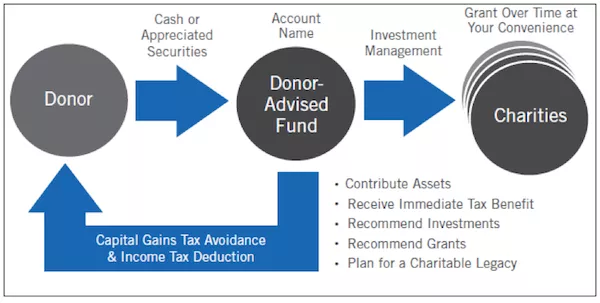
Think of a Donor Advised Fund as a charitable investment account. You contribute assets, like cash, stocks, or even real estate, into the fund. Once there, these assets can be distributed to charitable organizations of your choosing, on your timeline.
Organizations like Fidelity Charitable or Schwab Charitable manage these funds, making DAFs widely accessible and easy to use.
Nerd Note: DAFs are projected to hold over $234 billion in charitable assets by 2030, a testament to their growing popularity among philanthropists.
Why DAFs Stand Out
What makes DAFs special? Flexibility. You can make contributions when it’s financially or tax-efficient for you, but disburse funds to charities at any time, whether that’s immediately or years down the line.
Another perk? Anonymity. If you'd prefer to make donations without recognition, DAFs offer a seamless way to support causes while protecting your privacy.
The Compelling Tax Benefits of Donor Advised Funds
DAFs don't just maximize your charitable impact, they're great for your financial planning too. Here’s how they can help you save on taxes.
Immediate Tax Deduction for Contributions
When you contribute to a DAF, you receive an immediate tax deduction, even if the funds are distributed to charities over time. For example, donating stocks can reduce your taxable income, and the deduction amount is often based on the fair market value of your donation.
Saving on Capital Gains Taxes
Did you know you can avoid capital gains taxes by donating appreciated assets like stocks? Instead of selling an asset and being taxed on the profit, you can transfer them to a DAF and retain full value for charitable purposes.
Nerd Note: Donating your most appreciated stocks can save thousands in taxes, especially for high earners by avoiding paying tax on the gains alone.
Bunching Contributions for Maximum Savings
Bunching is a strategic move where you consolidate multiple years of donations into one tax year to exceed the standard deduction threshold.
Example:
- Scenario A: You donate $10,000 annually, which doesn’t exceed the standard deduction threshold.
- Scenario B: You contribute $30,000 to a DAF in one year, allowing you to itemize deductions and maximize tax benefits. At the 32% tax bracket for an individual, this alone can save ~$5,850.
This approach ensures you get the most out of your generosity.
Source: kitces.com
How DAFs Support Smooth Philanthropy and Ongoing Impact
DAFs simplify the giving experience while allowing donors to ensure sustainability in their philanthropic efforts.
Sustainability in Giving
Donors can "pre-load" a DAF for long-term giving. Rather than scrambling to fund causes annually, you have a pool of funds ready to support charities when needed.
Investing the Contributions
The assets in your DAF can grow tax-free, meaning your contribution has the potential to create even greater impact over time.
Nerd Note: A $25,000 contribution invested with just 5% annual growth could grow to $31,600 in five years, creating even more support for your favorite causes.
Simplifying Record-Keeping
No more chasing down donation receipts for tax season! With a DAF, all contributions and grants are documented in one place, making reporting easier and more convenient.
Unexpected Yet Strategic Uses for Donor Advised Funds
DAFs aren't just about strategic giving. They offer creative solutions for legacy planning and unexpected needs.
Legacy Planning with DAFs
DAFs can be a powerful estate planning tool. By leaving IRA assets or other funds to a DAF upon passing, you can eliminate estate taxes while ensuring your charitable legacy. For those over 70.5, Qualified Charitable Distributions (QCD's) are available to send funds directly to charities from your IRA, as well as reduce your taxable Required Minimum Distribution for those over 72...the catch is that these cannot be deposited into a DAF, they must go directly to the charity.
Families often use DAFs to create a culture of giving that spans generations, teaching heirs the importance of philanthropy.
Emergency Relief and Other Uses
Need to respond to a disaster or urgent cause? DAFs are perfect for fast action. With pre-loaded funds, there’s no need to liquidate assets or wait. The moment you see a need, you’re ready to give.
Common Questions About Donor Advised Funds
Who Should Consider a DAF?
DAFs are ideal for philanthropists of all types, whether you're trying to optimize taxes, donate complex assets, or structure long-term giving.
Are There Administrative Costs?
Though DAFs have management fees, they’re often more affordable than creating a private foundation. Minimum contributions depend on the institution but commonly start around $10,000.
Can You Change Where the Money Goes?
Yes! Flexibility is a hallmark of DAFs. You can modify your charitable beneficiaries over time, giving you room to adapt your priorities.
How Do I Open a DAF?
Institutions like Fidelity Charitable, Schwab Charitable, or even local community foundations make setting up a DAF simple and accessible.
Amplify Your Giving Potential Today
Donor Advised Funds offer an unparalleled combination of flexibility, tax advantages, and simplicity. These tools have empowered philanthropists to better manage their charitable giving and create lasting impacts. Through strategic timing and planning, families can potentially give in excess of 50% more to the causes of their choosing without increasing their personal out-of-pocket costs. (Note: Individual results will vary depending on specific tax situations.)
Whether you’re looking to simplify your donations, maximize tax benefits, or plan for a philanthropic legacy, DAFs may be the perfect fit.
If you’re ready to explore how DAFs can elevate your philanthropy, HealthyFP is here to help. Our experts are ready to guide you toward more meaningful and impactful giving.
Stay ahead of tax season
Get tax planning strategies and deadline reminders delivered to your inbox monthly.